
Back Up in Sign Language (ASL)
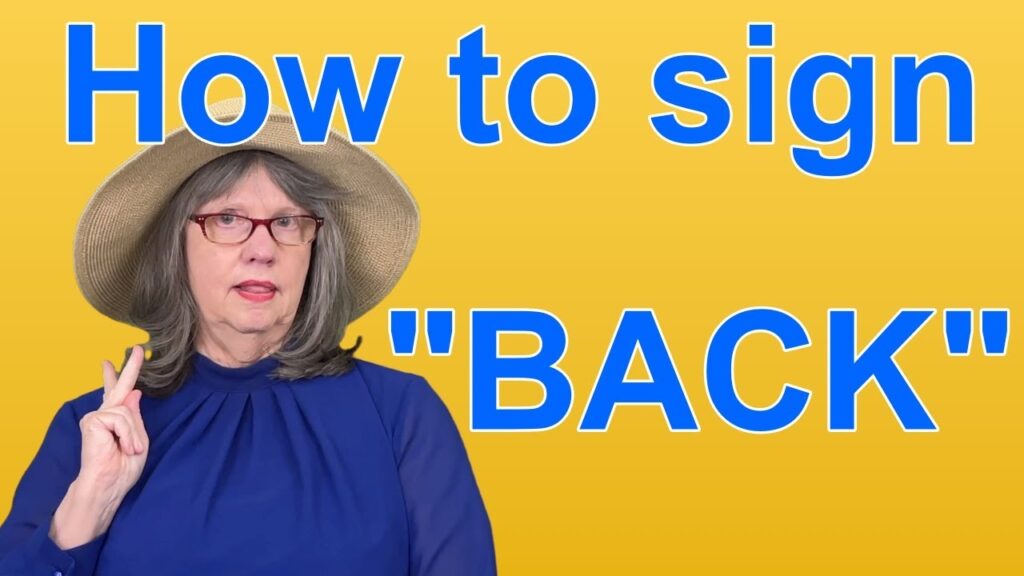
The sign “Back Up” is used to indicate the action of retreating or moving away from a position. This sign can be applied in various contexts, such as asking someone to physically back away, or metaphorically, in situations where someone needs to reconsider their approach or distance themselves from a topic. It is a versatile sign that can enhance communication clarity in both casual and formal conversations.
[VIDEO_PLACEHOLDER]
Table of Contents
Forming the sign
- Handshape: Start with both hands in a flat “B” handshape, with fingers extended and together, and the palm facing outward.
- Location: Position your hands at about waist level in front of your body.
- Movement: Gradually move your hands backwards, away from your body, while maintaining the “B” handshape. This motion should be smooth and deliberate, emphasizing the action of retreating.
- Non-manual signals: Incorporate facial expressions that match the context. A serious face may indicate urgency, while a neutral face may imply a simple request.
When forming the sign, the clarity of your handshape and the smoothness of your movement are essential for effective communication. “Back Up” conveys not just the physical action but also the intent behind it, so be mindful of your facial expressions, which can add depth to your message.
Showing tense, aspect & repetition
The sign “Back Up” can be modified to indicate different tenses or aspects. For example, to show past actions, you might perform the sign slowly and with a backward motion that suggests a completed action. For present continuous, you can repeat the motion several times, indicating an ongoing action of backing up. Similarly, for future tense, a slight pause before initiating the sign may suggest an upcoming action.
“Back Up” in everyday signing
This sign is commonly used in daily interactions. For instance, during conversations about personal space, you might say, “Please back up a bit.” Additionally, it can be metaphorically applied in discussions that require someone to reconsider their stance, like saying, “You may want to back up on that idea.” Understanding when and how to use “Back Up” can greatly enhance your conversational skills in ASL.
Common confusion with a similar sign
Some learners might confuse “Back Up” with the sign for “stop.” While both convey a sense of distancing, “Stop” is more about halting an action and does not carry the same retreating connotation. To differentiate, remember that “Back Up” involves a physical motion of moving away, while “Stop” is a static sign that indicates a pause or cessation.
FAQ
What is the context in which I would use “Back Up”?
You would use “Back Up” when asking someone to physically move away from you, or when suggesting that someone reconsider their position on a topic.
Can “Back Up” be used in a non-physical sense?
Yes! “Back Up” can be applied metaphorically, such as when discussing ideas or opinions that someone may need to reconsider.
Is there a difference in signing “Back Up” for different contexts?
While the handshape and movement remain the same, your facial expressions and body language may vary based on the context, indicating urgency or casualness.
How do I practice the sign “Back Up”?
Practice in front of a mirror to ensure your handshape and movement are clear. You can also role-play scenarios where you would use the sign to build confidence.
Are there regional variations of “Back Up” in ASL?
While “Back Up” is widely understood, some regions may have slight variations in movement or facial expression. Observing native signers can help you adapt to local nuances.
Practice ASL Signs
Use your camera to practice signs and get real-time AI feedback on your technique.
Free · No signup required