
After in Sign Language (ASL)
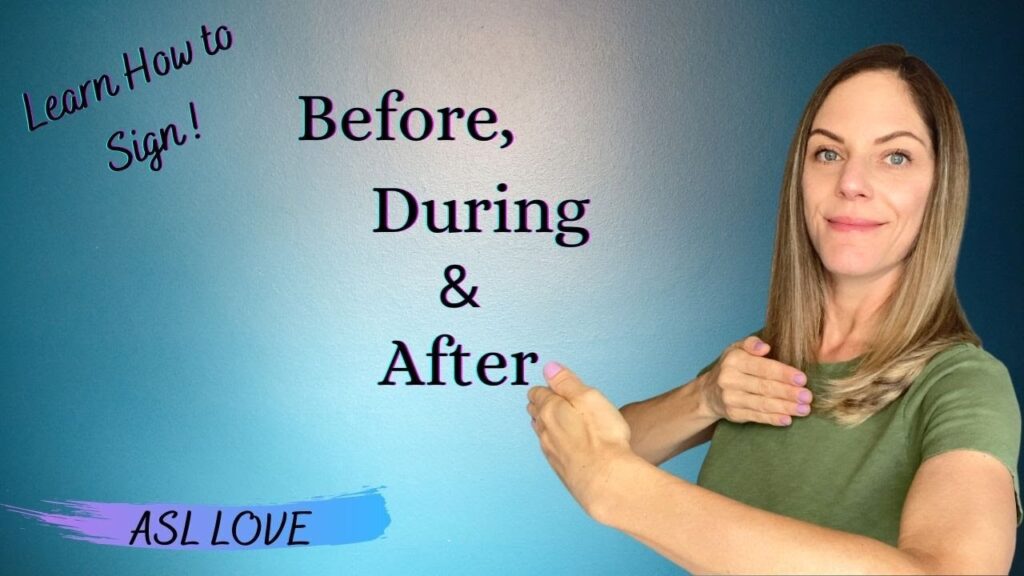
The sign “After” is used to convey the concept of time, indicating that something occurs following a particular event or moment. This sign is essential for discussing sequences in conversation, whether in storytelling or everyday dialogue, helping clarify timelines and expectations. It can often be paired with other signs to establish context more clearly.
[VIDEO_PLACEHOLDER]
Table of Contents
Forming the sign
- Handshape: The dominant hand forms a flat ‘B’ handshape, with fingers extended and together.
- Location: Begin by placing your dominant hand in front of your body, slightly to the side of your non-dominant side.
- Movement: Move your dominant hand away from your body, forward and slightly upward, as if pointing to a future event in time.
- Non-manual signals: You may raise your eyebrows slightly as you start the movement to indicate that you’re introducing a new concept related to time.
The sign “After” is straightforward yet powerful in its ability to denote sequences. As you perform the sign, ensure your body language aligns with the meaning, such as maintaining an attentive posture. The movement should feel fluid, reflecting the natural passage of time.
Using “After” in sentences
In everyday conversations, “After” can be used in a variety of contexts. For example, you might say, “I will eat lunch after class,” which would be signed by depicting the class sign first, followed by the sign for “after.” This helps to clarify the order of events for your audience. The flexibility of the sign allows it to be integrated seamlessly into both short phrases and longer narratives, enhancing overall communication.
Signs related to “After”
Understanding “After” can be enhanced by learning related signs, which provide additional context and nuance. Here are some useful connections:
- Before – This sign indicates a prior event, offering a contrast to “After.”
- Next – Use this sign to indicate the immediate subsequent event.
- Later – This sign can imply a more extended time after an event.
- Then – A sign often used in storytelling to indicate a sequence of events.
Common confusion with a similar sign
Many learners confuse “After” with the sign for “Later,” as they both relate to time. However, “Later” often implies a more distant point in time, while “After” is typically used for events that follow immediately or with less delay. To avoid confusion, pay attention to the context in which these signs are used and practice each sign in relevant phrases to solidify your understanding.
FAQ
What is the difference between “After” and “Next”?
“After” refers to something that occurs following another event, while “Next” indicates the immediate event that follows. For example, “After lunch” can imply a longer period, while “Next” specifically refers to what comes right after in sequence.
Can “After” be used in different tenses?
While “After” itself does not change form, the context of the sentence can indicate when the actions take place, such as using time indicators before or after the sign to clarify past, present, or future events.
Is “After” used in both storytelling and everyday conversation?
Yes, “After” is versatile and can be used in both detailed storytelling to outline sequences and in casual conversation to discuss plans or events.
How can I practice using “After” effectively?
To practice effectively, create sentences about your daily routine, using “After” to connect events. Engage with other Deaf individuals or ASL students to practice in conversation, reinforcing your understanding of its usage.
Practice ASL Signs
Use your camera to practice signs and get real-time AI feedback on your technique.
Free · No signup required