
Accident in Sign Language (ASL)
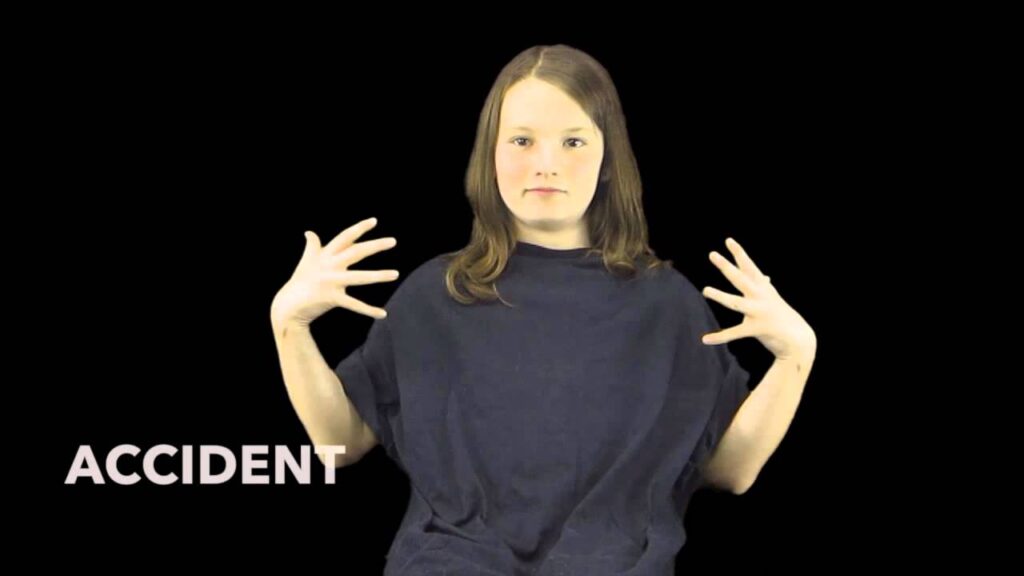
The sign “Accident” refers to an unexpected event, often causing damage or injury. It is commonly used in conversations about safety, traffic incidents, or mishaps in daily life. Understanding how to sign “Accident” can enhance communication in various contexts, especially when discussing emergencies or unplanned occurrences.
[VIDEO_PLACEHOLDER]
Table of Contents
How to Form the Sign “Accident”
- Handshape: Use the dominant hand in a flat “B” handshape.
- Location: Position your hand in front of your body, around the chest area.
- Movement: The sign involves a downward motion where the flat hand moves slightly downward from the chest.
- Non-manual signals: Raise your eyebrows while signing to indicate that the event being referenced is unexpected or surprising.
This sign conveys the concept of an accident, emphasizing the unplanned nature of the incident. The handshape and movement combined with appropriate facial expressions create a clear representation of the word. Practicing the sign with varying levels of intensity can help convey the severity of the accident being discussed.
Using “Accident” in Sentences
Here are some examples of how to incorporate “Accident” in everyday conversation:
- The car accident on Main Street caused a lot of traffic.
- She slipped and fell; it was just a small accident.
- They were discussing the accident that happened yesterday.
This sign is versatile and can be used in various contexts to discuss incidents, mishaps, or unintended consequences. Adjusting your facial expressions will help convey the seriousness or lightheartedness of the situation.
Signs Related to “Accident”
Explore these related signs to expand your vocabulary:
- Injury – Refers to harm or damage to a person’s body.
- Safety – The condition of being protected from danger or risk.
- Emergency – A serious, unexpected situation requiring immediate action.
- Mistake – An error or misunderstanding that leads to unintended consequences.
Common Confusion with a Similar Sign
Many learners confuse “Accident” with the sign for “Incident.” While both refer to events that happen unexpectedly, “Accident” often implies an unintended harmful occurrence, whereas “Incident” may involve a broader range of events, including non-harmful occurrences. Pay attention to the context to determine which sign is appropriate.
FAQ
What is the significance of facial expressions when signing “Accident”?
Facial expressions are crucial in ASL as they convey tone and context. For “Accident,” raising your eyebrows shows surprise and emphasizes the unexpected nature of the event.
Can “Accident” be used in different contexts?
Yes, “Accident” can refer to various types of unplanned events, including traffic accidents, workplace incidents, or any mishaps that cause damage or injury.
How can I practice the sign “Accident”?
Practice in front of a mirror to observe your handshape and facial expressions. Additionally, use it in conversations with others who know ASL to gain confidence.
Are there any regional variations of the sign “Accident”?
While “Accident” is generally standardized, some regional variations may exist in terms of handshape or movement. Engaging with a variety of Deaf communities can expose you to these differences.
Practice ASL Signs
Use your camera to practice signs and get real-time AI feedback on your technique.
Free · No signup required